
Embrace innovation and efficiency for electrified mobile machinery.
Understand the pros and cons of the four stages of electrifying mobile machinery: replacing diesel engines with batteries, optimizing hydraulic systems, harnessing energy recovery, and fully transitioning to electric systems by removing hydraulics entirely.
Mobile machinery power transmission is undergoing a rapid transformation, driven by regulatory pressures, the demand for environmentally friendly technology, and the need to reduce operational costs. This article explores the current trends, the role of hydraulics, and the different levels of electric machinery shaping the industry's future.
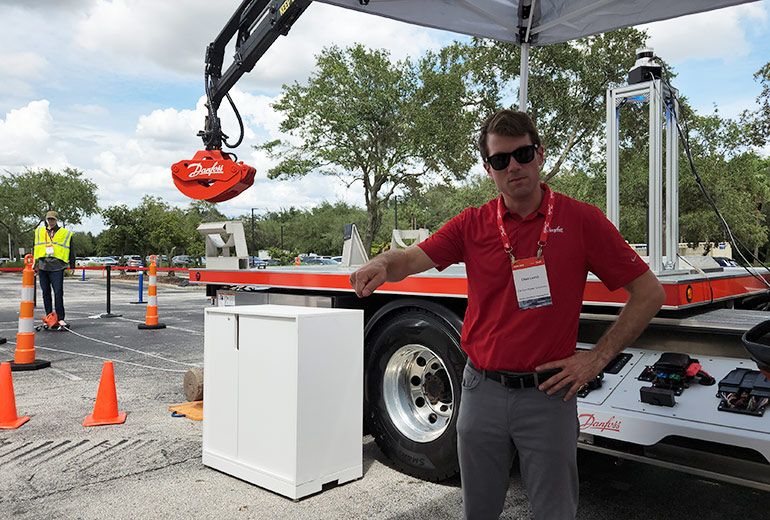
At the recent Danfoss Distributor Meeting, Chad Larish, Principal Engineer at Danfoss Power Solutions, provided an insightful overview of where off-highway technologies currently stand and where they're heading in terms of electrification.
**Current Market Trends **
The global momentum towards electrified mobile machinery is accelerating, spurred by stringent emissions regulations and a growing emphasis on sustainability. Zero-emission zones in Europe and select U.S. cities are prompting Original Equipment Manufacturers to innovate and develop electrified machines. Additionally, considerations like total cost of ownership, including savings on maintenance and fuel, are increasing interest in electric alternatives for various applications, from construction sites to warehouse operations.
Applications Driving Electrification confined operation sites and urban areas are becoming pivotal markets for transitioning from diesel to electric power, according to Chad Larish. Aerial work platforms are a prime example, with electrification rapidly gaining ground. “A few years back in China, only about 30% of aerial work platforms were electric, but now we’re seeing that number rise to over 70%,” Larish explained. Interestingly, this shift is not driven by regulations but by practical advantages: the widespread availability of power at construction sites, fuel cost savings, reduced maintenance expenses, and efficient two-day runtimes.
Compact and low-duty machines, especially those with shorter operational durations, are well-suited for electrification. Downsizing or eliminating engines is an easier transition for equipment designed for shorter runtimes, like those that can be charged using urban infrastructure. There’s also growing interest in electrifying mid-sized utility machines and equipment operating in confined environments, such as yards or airports, where mobility needs are relatively contained.
However, challenges remain. Current charging infrastructure limitations mean that electric machines often achieve only around three hours of runtime compared to the anticipated four to six hours. The straightforward solution of adding more batteries proves impractical due to increased weight and costs, making it essential to address hydraulic inefficiencies.
Phases of Electrification
- Phase One: Electric Prime Mover
The initial step into electrification involves swapping diesel engines for battery-powered electric motors, with no other significant changes to the system. Batteries power electric motors, marking the first foray into electrification. This phase is all about functionality and learning the ins and outs of battery integration. “Many customers are exploring electrification cautiously, making minimal changes as they learn about battery technology and voltage standards,” Larish said. Yet, the challenge remains: these machines often have limited runtimes, sparking further innovations in efficiency.

2. Optimizing Hydraulics
With the adoption of battery-powered machines, the inefficiencies of hydraulic systems become more noticeable, necessitating optimization to improve machine efficiency and runtime. Advances in hydraulic technologies are focused on minimizing energy losses, with innovations such as improved pump designs and intelligent flow management systems. This phase takes a comprehensive approach to maximizing electric power benefits while maintaining hydraulic efficiency where needed.
There is no one-size-fits-all solution for increasing hydraulic efficiency, according to Larish. Depending on the machine’s needs, you may retain the existing pump—whether it’s a fixed-speed, variable displacement pump or consider variable-speed and fixed-displacement pumps. Regardless of the type chosen, the goal is to provide flow at its highest efficiency, requiring more coordinated control between the electric motor, pump, valve, and demand. This integration demands more intelligent machine systems than traditional setups.
Fixed displacement pumps, which do not allow for changes in displacement, depend on speed for flow. They are most efficient at higher flows with lower pressures or lower torques. However, as torque increases and speed decreases, efficiency tends to decline. Additionally, in dynamic machines with varying flows, the constantly changing speed can generate undesirable noise for operators.
Variable displacement pumps offer more flexibility. By adjusting the swashplate angle, displacement can be reduced, and speed optimized for improved efficiency. Another technology driving hydraulic optimization is variable margin control. This allows for better hydraulic efficiency by tailoring the margin in the circuit to exactly what is needed. Danfoss’ test in a forestry application in Finland showed a 10% fuel economy improvement using this approach.
Danfoss' Digital Displacement Pump technology is a leading example of optimizing hydraulic efficiency, especially when paired with its Editron system. Digital Displacement pumps use solenoid valves to control each cylinder on a shaft-turn-by-shaft-turn basis, offering faster response times and reducing energy losses by up to 90% compared to conventional pumps.
3. Recuperable Energy
In this phase, the focus shifts to capturing and storing energy during machine operations. Technologies like regenerative braking, where energy from lowering booms or braking actions is captured, are being integrated into machines to further improve efficiency and reduce overall energy consumption.
While recuperating energy back to the battery is an ideal goal for many machines, the system’s complexity and cost must be justified by the energy savings. Additionally, any changes to recuperation architecture must not compromise existing performance, functionality, or safety.
Regeneration involves reallocating hydraulic oil from a pressurized cylinder to another part of the circuit to backfill the cylinder. This allows the function to lower by gravity, eliminating the need for pump flow. Machines with single-function operations, like lifting functions, are more likely to benefit from recuperation technologies.
4. Electromechanical Actuators
Machines that fully eliminate traditional hydraulic systems adopt electromechanical actuators (EMAs). While promising for specific applications, such as urban environments or controlled industrial settings with easy access to charging infrastructure, these systems face challenges related to cost, complexity, and robustness when compared to hydraulics.
“There are several prototype platforms using EMAs, but they have their own challenges. They are less efficient at energy recuperation and are not as shock-tolerant as hydraulics,” Larish said. “Fully electric designs have additional requirements.”
Electrohydraulic actuators (EHAs), which use a hydrostatic arrangement, are more commonly seen in industrial hydraulic applications. On the other hand, electromechanical actuators include designs like ballscrew, roller screw, rack and pinion, and flat belt technologies. These actuators offer efficiencies between 60% and 85%, compared to hydraulics’ 40% efficiency. However, these actuators can be bulky and require additional protection because they are not as shock- and vibration-tolerant as hydraulic systems. Additionally, they tend to be more costly, which increases the price of the end product.
Challenges and Considerations
Efficiency: While electric motors are highly efficient (85-95%), challenges remain in optimizing the overall system, particularly in hydraulic subsystems where energy losses can occur in pumps, control valves, and flow regulation.
Cost and Space: Battery technology remains expensive, and many customers hesitate to invest in machines that may cost more than double their diesel counterparts. Adding more batteries also presents spatial challenges, particularly in compact equipment where every pound counts.
Application-Specific Solutions: The path toward full electrification varies by application. While compact equipment and aerial work platforms are ideal candidates for electrification, larger machines like 25-ton excavators or machines used in remote areas face obstacles, particularly regarding charging infrastructure and high-power demands.
Future Directions and Innovations
Looking ahead, the industry is exploring hybrid solutions that combine electric and traditional power sources, providing a balance of efficiency, performance, and cost-effectiveness. Innovations in battery-swapping technology and hybrid architectures are expected to address the diverse needs of various applications while continuing to push the boundaries of mobile electrification.
While mobile electrification represents the future of cleaner, more efficient machinery, the journey to more mobile electric fleets is complex. From optimizing existing hydraulic systems to exploring advanced electromechanical solutions, OEMs and customers alike are navigating a landscape of technological innovations and regulatory compliance.