
Proactive Obsolescence Management: Automating EOL and Lead Time alerts via API integration.
In an increasingly unpredictable electronic supply chain, relying on manual lifecycle management—simply waiting for manufacturer notifications—has become an unacceptable operational risk. This article analyzes the "invisible obsolescence crisis" and proposes a breakthrough software architecture solution: leveraging API integration to automate data collection, monitor lead time volatility, and proactively forecast End-of-Life (EOL) events before supply chain ruptures occur, thereby safeguarding the continuity of large-scale manufacturing.

Proactive Obsolescence Management: Automating EOL and Lead Time Alerts via API Integration
Table of Contents
Overview
In an increasingly unpredictable electronic supply chain, relying on manual lifecycle management—simply waiting for manufacturer notifications—has become an unacceptable operational risk. This article analyzes the "invisible obsolescence crisis" and proposes a breakthrough software architecture solution: leveraging API integration to automate data collection, monitor lead time volatility, and proactively forecast End-of-Life (EOL) events before supply chain ruptures occur, thereby safeguarding the continuity of large-scale manufacturing.
1. The Invisible EOL Crisis
Technology product lifecycles are shrinking at an accelerating pace, creating a massive surge in obsolescence across the industry. In 2025 alone, the electronics sector saw over 620,000 components discontinued—a staggering jump of nearly a full third (150,000 parts) compared to EOL figures from just two years prior. However, the most dangerous vulnerability for engineering teams remains the PCN blind spot, characterized by the sudden evaporation of Product Change Notifications. Disturbing data reveals that 52% (over 323,000 parts) of all components discontinued in 2025 were completely unaccompanied by a manufacturer PCN, proving that relying on manual data collection leaves organizations in a constantly reactive and precarious state.
2. The Ripple Effect of Information Disruption
When components vanish from the market without a prior PCN warning, engineering and procurement teams are subjected to a cascade of operational risks.
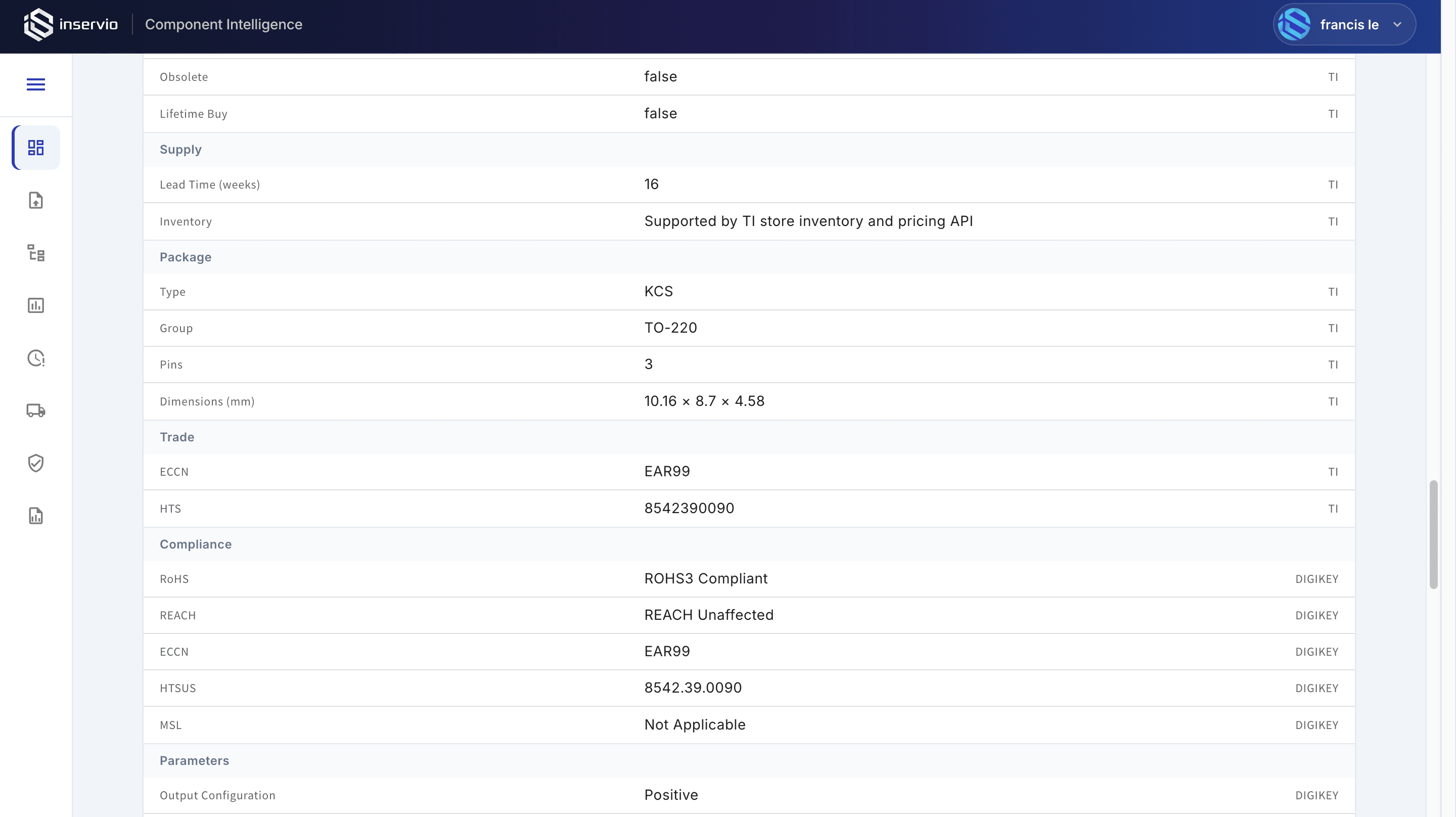
Chief among these risks are lost Last-Time-Buy (LTB) opportunities; without advanced EOL warnings, companies are stripped of the critical window to stockpile strategic inventory. Consequently, procurement teams are forced into secondary markets, introducing inflated costs, counterfeit risks, and qualification nightmares. This scarcity directly triggers sudden design disruptions. If a key microcontroller or integrated circuit disappears unexpectedly, entire printed circuit boards (PCBs) become immediately unsustainable, where even minor discrepancies in voltage tolerances, pin configurations, or package sizes demand months of firmware updates, thermal reanalysis, and redesign efforts. Compounding these engineering challenges are severe compliance and certification bottlenecks. Every rushed replacement component must clear rigorous environmental regulatory hurdles, such as RoHS, REACH, and emerging PFAS directives—a requalification and safety validation process that can delay maintenance programs by months in highly regulated sectors like aerospace or medical devices. Ultimately, the worst-case scenario unfolds when alternative sourcing strategies completely fail, leading to critical production interruptions where factories are forced to halt or reduce production lines, costing manufacturers hundreds of thousands to millions of dollars in lost time and revenue.
3. The Failure of Traditional Standards
Even when PCNs are actually issued, the quality of the data provided is often severely lacking. In fact, in 2025, only 27% of obsolescence PCNs complied with established industry communication guidelines, specifically JEDEC Standards 46 and 48. The stark reality that 73% of manufacturer notifications remain non-compliant proves that manual, human-driven data categorization is no longer a viable business strategy. Ultimately, this systemic failure drives the absolute necessity for organizations to transition toward machine-readable data processing and API-driven extraction methods.
4. Automating Risk Management via API Integration
To mitigate the reality of missing manufacturer notifications, Supply Chain Risk Management (SCRM) systems must pivot from reactive scrambling to proactive scanning.
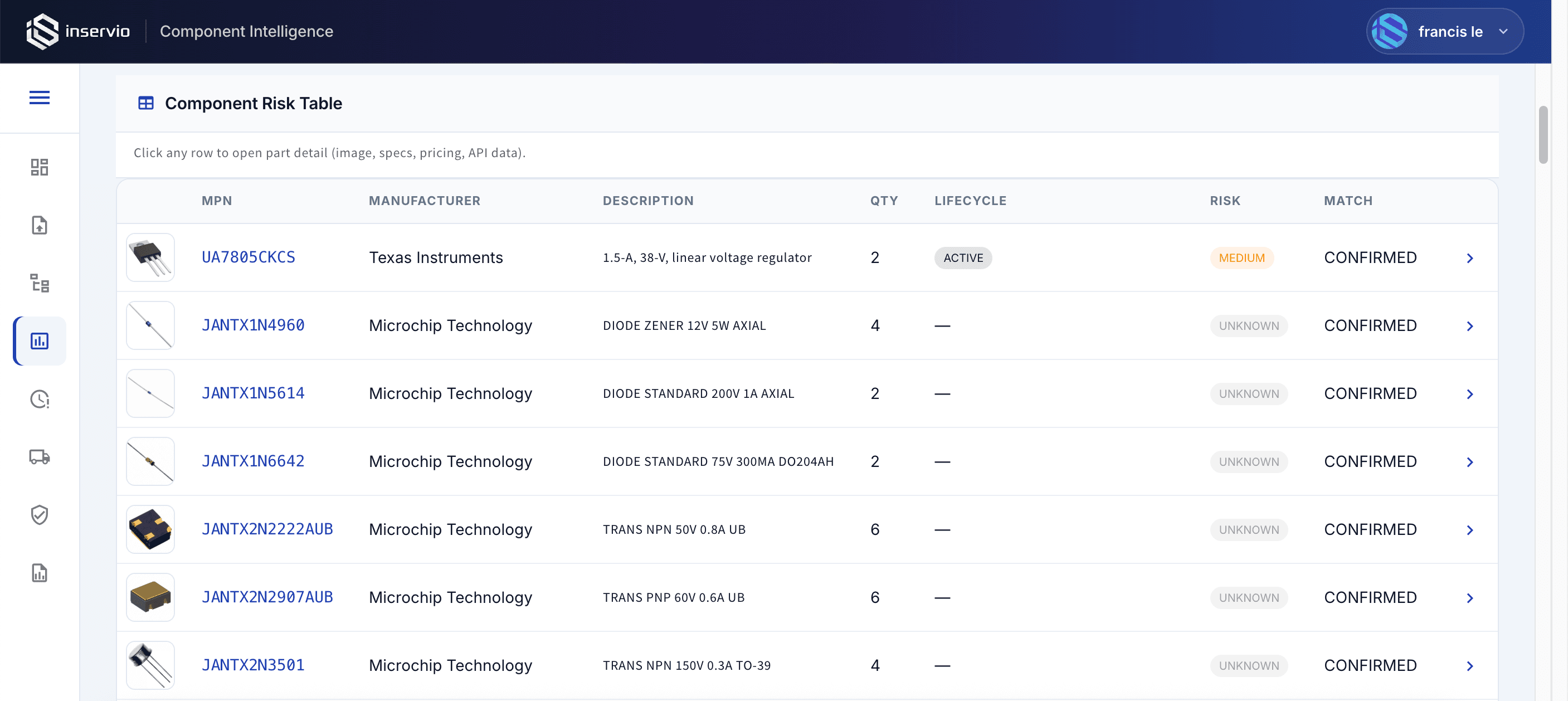
This transformation is driven by algorithmic lifecycle forecasting, where, rather than waiting for an email notification, the system executes scheduled API calls to extract real-time inventory levels, lead times, and production statuses. Advanced algorithms then evaluate these data points against market demand and technology roadmaps to generate an estimated time-to-EOL for every component. Furthermore, automated cross-referencing ensures that by structuring strict JSON processing logic, whenever a component's risk score breaches a safety threshold, the backend immediately scans the database to propose alternative parts. These alternatives are seamlessly and automatically tiered based on the closeness of the match using form, fit, and function criteria. Finally, the integration of automated PCN workflows allows APIs to be configured to capture lifecycle change signals instantly. The system can then automatically prioritize the urgency of the change and trigger cross-functional alerts, simultaneously notifying design engineering, procurement, and compliance teams so they can execute a strategic transition long before the crisis hits the manufacturing floor.